
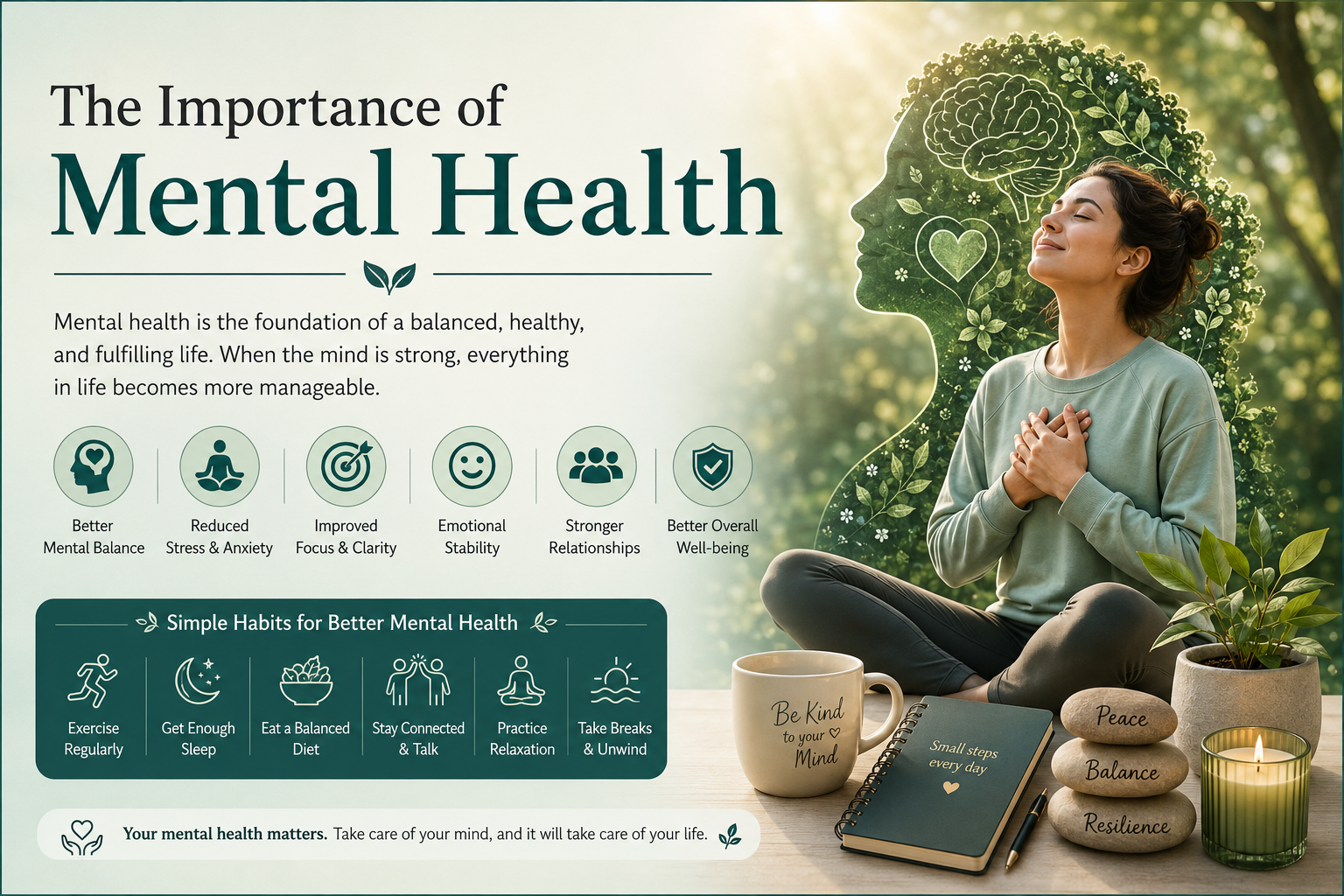
Mental health is an essential part of overall well-being and affects how people think, feel, and handle daily life. Just like physical health, mental health plays a major role in maintaining balance, productivity, relationships, and quality of life. Good mental health helps individuals manage stress, make better decisions, stay emotionally balanced, and cope with everyday challenges more effectively.
In today’s fast-paced world, factors such as work pressure, financial stress, lack of sleep, social isolation, and unhealthy lifestyles can negatively affect mental well-being. When mental health is ignored, it may lead to stress, anxiety, emotional exhaustion, lack of focus, low energy, and reduced confidence. Over time, poor mental health can also impact physical health, relationships, and overall daily functioning.
Maintaining mental wellness requires consistent self-care and healthy habits. Regular exercise, proper sleep, balanced nutrition, social connection, relaxation, and taking breaks from stress can help improve emotional well-being. Open conversations about mental health are also becoming increasingly important in reducing stigma and encouraging people to seek support when needed.
As awareness continues to grow, mental health is now being recognized as a key part of living a healthy and balanced life. Taking care of the mind is just as important as taking care of the body, and prioritizing mental wellness can lead to better happiness, resilience, and overall long-term well-being.